html/java

Tuesday, December 10, 2013

AGRA : The City of TAJMAHAL

Agra is the city of the Taj Mahal, in the north Indian state of Uttar Pradesh, some 200 km from Delhi.
Agra has three UNESCO World Heritage sites, the Taj Mahal and the Agra Fort in the city and Fatehpur Sikri nearby. There are also many other buildings and tombs from Agra's days of glory as the capital of the Mughal Empire.
The city has little else to recommend it. Pollution, especially smog and litter, is rampant and travellers are pestered by swarms of touts and hawkers at every monument, mosque, temple or palace. That said, the sites are some of the wonders of the world and no trip to India is complete without at least one visit to the Taj.

Get In
Agra is 200 km southeast from Delhi and is one of the points of the tourist's Golden Triangle of Agra-Delhi-Jaipur. Agra is also very well connected via rail and road with other nearby cities and tourist destinations.

Get Around
Tongas, electric buses and electric tempos are readily available, and the best way to get to the Taj where no cars are allowed. Auto-rickshaws and cycle-rickshaws are available every where, remember to agree on fares clearly in advance. In case you are a foreigner, please ensure that you bargain everywhere and bargain hard! Generally things are available at 40% of the initially quoted fares.
The best way to experience the city is to take a walk on the Mall Road (Sadar). The street is full of handicraft and leather goods shops. You will also find plenty of food items quite unique to the city. Indian palate is generally very spicy. Please ensure that you carry antacid tablets in case you are not habitual to the spicy foods
As a guide, an auto rickshaw from Agra Cantonement station to the Taj Mahal is about Rs 80 (at least in off season); and a cycle rickshaw from the Taj Mahal to Agra Fort is Rs 40.
An air conditioned taxi for the day should cost around Rs 1200. They will charge slightly more if you want to go to Fatehpur Sikri as it's a bit further out. Be warned that the drivers will probably try to make unscheduled stops along the way at marble and textile shops for which they receive commissions. Firmly tell them that you're not interested in shopping - though this might not get you anywhere so try to just go with the flow - you won't be pressured into buying anything but if you have a tight schedule it can be annoying.

Tourist Attraction
Tajmahal
Please note that the Taj Mahal is closed every Friday
The Taj Mahal is an immense mausoleum of white marble, built between 1631 and 1648 by order of the Mughal emperor Shah Jahan in memory of his favourite wife. Taj Mahal means Crown Palace; one of the wife's names was Mumtaz Mahal, Ornament of the Palace. The Taj is one of the most well preserved and architecturally beautiful tombs in the world, one of the masterpieces of Indian Muslim architecture, and one of the great sites of the world's heritage.
Grand Entrance Building to the Taj Mahal Complex
The Taj Mahal has a life of its own that leaps out of marble, provided you understand that it is a monument of love. The Indian poet Rabindranath Tagore called it a teardrop on the cheek of eternity, while the English poet, Sir Edwin Arnold, said it was Not a piece of architecture, as other buildings are, but the proud passions of an emperor's love wrought in living stones. It is a celebration of woman built in marble and that is the way to appreciate it.
Although it is one of the most photographed edifices in the world and instantly recognisable, actually seeing it is awe-inspiring. Not everything is in the photos. The grounds of the complex include several other beautiful buildings, reflecting pools, and extensive ornamental gardens with flowering trees and bushes, and a small gift shop. The Taj framed by trees and reflected in a pool is amazing. Close up, large parts of the building are covered with inlaid stonework.
There is an apocryphal tale that Shah Jahan planned to build an exact copy out of black marble on the opposite side of the river. His plans were foiled by his son, who murdered three elder brothers and overthrew his father to acquire the throne. Shah Jahan is now buried alongside his wife in the Taj Mahal.
If you are taking a camera, beware that because the Taj is white your camera may underexpose your photos. If it is a film camera you will not find out until it is too late. Overexposure by 1 or 2 stops is recommended.
The Taj is open from 6:00 AM to 6:30 PM (sunset) every day except Friday. Entry costs ₹750 for foreigners and ₹20 for Indians. Get there as early as possible to beat the crowds, crowds are the worst during the weekend when people overshadow the grandeur of the Taj (but note that the gates won't open until at 6AM at the earliest - often a few minutes later, so don't bother getting there at 5AM), and plan to visit the Taj at least two different times during the day (dusk and dawn are best) in order to experience the full effect of changing sunlight on the amazing building. It is also utterly stunning under a full moon. You can also get very good views from Mehtab Bagh (see Gardens section below).
To buy tickets, you can go to the South gate, but this gate is 1 km far away of the entrance and the counter opens at 8:00 AM. At the West and East gates, the counters open at 6:00 AM. These gates also have smaller queues in peak times as the big tour buses drop groups off at the South gate. Alongside the ticket counter, you can also purchase a self-guided audio tour (allows two to a device) for ₹100 in English and foreign languages and ₹60 for Indian languages.
The Taj is located pretty much in the middle of town. Expect a line to get into the grounds. There are three gates. The western gate is the main gate where most tourists enter. A large number of people turn up on weekends and public holidays and entry through the western gate may take hours. The southern and eastern gates are much less busy and should be tried on such days.
There are night viewing sessions on the nights of a full moon and the two days before and after (so five days in total). Exceptions are Fridays (the Muslim sabbath) and the month of Ramadan. Tickets must be purchased 24 hours in advance, starting at 10am, but do not always sell out, so it can be worth looking into it when you arrive even if well after 10am. Tickets only allow viewing from the red sandstone plaza at the south end of the complex, and only for a 1/2 hour window. Make sure to wear mosquito repellent.
It is a good idea to bring a flashlight, because the interior of the Taj Mahal is quite dark (even during the day) and to fully appreciate the details of the gem inlays, you need a good light.
Taj Mahal can also be seen during Night 2 days before and 2 days after full moon in all 5 days including full moon, the booking has to be made 24 hours in advance from Archeological Society of India office situated at 22, Mall Road, Agra. Ticket fare is Rs. 500 for Indian Nationals and Rs. 750 for Non Indians. The viewing hours for night viewing is from 8:30 pm to 9:00 pm and 9:00 pm to 9:30 pm. A visitor has to reach 30 mins prior to viewing hours for security check at Taj Mahal Ticketing counter on East Gate of Taj Mahal or he may loose his/ her chance. The Night View is not worth spending as the visitors are kept quite far from Taj Mahal nearly 200 Mts away and there in no light so it could hardly be seen during night hours at viewing hours. Cameras also do not give images with near zero flux can easily be avoided for night viewing.

Agra Forte
The fort is similar in layout to the Red Fort in Delhi, but considerably better preserved, as much of Delhi Fort was razed by the British after the Mutiny. As much as palace as a defensive structure, it is also constructed mainly from red sandstone.
Emperor Akbar, king at 14, began consolidating his empire and, as an assertion of his power built the fort in Agra between 1565 and 1571, at the same time as Humayun's Tomb in Delhi. Emperor Shah Jahan added to the fort and ended up a prisoner in it. The fort has a beautiful view of his masterpiece, the Taj Mahal, on a clear day.
You can get to the fort by Rickshaw from Taj Mahal for around ₹25-30. Entry to the fort is ₹250 (plus levy of ₹50 if you have not already paid the ₹500 fee for Taj Mahal).
There are left luggage services at Agra Fort where you can stow your bags at no cost. A fine of ₹5,000 applies if you lose your luggage ticket.
There are also audio guides available at Agra Fort which you can rent for a cost of ₹100 in English and other foreign languages (German, French, Spanish, etc) or ₹60 in Indian languages such as Hindi or Bengali.

Gardens
  • Soami Bagh, (10 km north of Agra). The white marble samadhi of the Radha Soami religion is currently under construction. It was started in 1904 and is not expected to be completed until sometime next century. You can see pietra dura inlaid marblework actulally being worked on. Soami Bagh is 2km north of Agra and can be reached by bus or cycle.
  • Ram BaghThe first Mughal gardens, built by the first Mughal Emperor Babar, 500 m North of the Chini Ka Rauza.
  • Mehtab Bagh, (directly across the Yamuna River from the Taj Mahal, the trip takes about 30 minutes from the centre of town by autorickshaw and will cost about ₹200). Sunrise to SunsetThese botanical gardens give you an opportunity to view the Taj at a remove from the crowds of tourists.. Alternatively, walk past the entrance and straight to the sandy banks of the river: the view of the Taj is every bit as lovely (perhaps more so, since the barbed wire fence surrounding the gardens will be behind you), although you may have to deal with aggressive touts. In the rainy season when the river is full you can get good photos of the Taj at sunset, as the reflection mirrors off the water. Don't forget to take a round trip by auto rickshaw. Entrance to the park is ₹100 for foreigners.

Temples

  • Balkeshwar Temple, (At Balkeshwar, at river side of Yamuna). A temple of Lord Shiva
  • Kailash Temple, (at Sikandra, at the river Yamuna). A Lord Shiva Temple.
  • Mankameshwar Temple, (At Rawatpara, near Agra Fort railway station. Near the raja ki mandi; a simple cycle rikshaw can take you there for a fare of 20/-.). Listen to the aarti, it purifies your soul. It is the MOST VISITED temple by LOCALS.....and during festive seasons its so crowded disrupting the traffic in the nerby areas.... 
  • Prithvinath Temple, (At Shahganj. On road to Jaipur.).
  • Rajeshwar Temple, (At Village Rajpur. On road to Shamshabd.).
  • Shyam Ji Maharaj Temple (At Bijlighar).
  • Mahakal And Mahakali Temple, (At Sikandra railway crossing on Sikandra Bodla road).
  • Rawli Maharaj Temple, (At Collectrate crossing, beside the railway track). Very old temple.

Other sights


  • Sikandra, (10 km north of Agra on the Agra Delhi highway). Open from sunrise to sunsetThe tomb of Akbar lies here in the centre of the large garden. Akbar started its construction himself but it was completed by his son Jehangir, who significantly modified the original plans which accounts for the somewhat cluttered architectural lines of the tomb. Four red sandstone gates lead to the tomb complex: one is Muslim, one Hindu, one Christian, and one is Akbar's patent mixture.

  • Itmad-Ud-Daulah's TombEmpress Nur Jehan built Itmad-Ud-Daulah's Tomb, sometimes called the Baby Taj, for her father, Ghias-ud-Din Beg, the Chief Minister of Emperor Jahangir. Small in comparison to many other Mughal-era tombs, it is sometimes described as a jewel box. Its garden layout and use of white marble, pietra dura, inlay designs and latticework presage many elements of the Taj Mahal.

  • Mariam's Tomb, (West from Akbar's Tomb on Agra-Delhi highway). Constructed by Jahangir in the memory of his mother Mariam Zammani a title bestowed upon her,. The grave is made of white marble. Though this building is in a ruined condition, yet it has in its vicinity, a Christian Mission School and a church. It is also said; Akbar himself made that it in the memory of his Christian wife.

  • Jama MasjidA large mosque attributed to Princess Jahanara Begum, built in 1648 during the reign of the father Shah Jahan. Notable for its unusual dome and absence of minarets.

  • Chini Ka RozaA memorial dedicated to the Prime Minister of Shah Jahan, Allama Afzel Khal Mullah Shukrullah of Shiraz, notable for its dome of blue glazed tiles.

  • Gurudwara Guru ka Taal, (at Delhi-Agra Highway, located between Transport Nagar and Sikandra), 


BUNDI

Bundi is a blue city in eastern Rajasthan. It's a special destination on its own. An oasis in the desert state , a serene civilization far from the maddening crowd & a tourists' destination . Attracted Rudyard Kipling (writer of The Jungle Book), Rabindra Nath Tagore, Virginia Fass, film maker Satyajit Ray .. and many more. Thousands of tourists, both domestic and foreign, come here to see and discover this beautiful place. Bundi was named after a Meena Chieftain Bunda. Bundi is especially famous for the miniature paintings from the "Bundi School" and the aesthetic stepwells. Bundi has some of the most friendly locals in the whole of India. By the end of a week's visit you will know almost everyone within a two street radius, and will probably have been invited in for tea numerous times. Marijuana is readily available (legally!!!) over the counter for astonishingly cheap prices, and the locals are incredibly generous with theirs too.

Get Around
Most of Bundi is very accessible by walking and there is generally no need to hire transport. Virtually the only mode of public transportation is the auto rickshaw. As always in India, bargaining is required.

See
There are lots of small tourist attractions in Bundi.
  • Taragarh Fort The biggest of them is this fort built somewhere in the 16th century. This fort counts amongst the most famous ones in Rajasthan for its intricate structures and a highly-regarded painting gallery (from here originated the Bundi style of Mural Paintings ).
  • Shikar Burj and Jait Sagar Shikar Burj is the name of the place that was used by kings for hunting. It is very near to a small lake called Jait Sagar. This lake was once famous for lotus flowers. Near Jait sagar there is a small garden called Terrace garden.
  • Phool Sagar This is another small palace and was more of a summer palace. Prior permission from the DM of the city is required to visit the same as it is still under the control of the royal family.
  • Stepwells These 32 stepwells were used as a water supply (drinking and washing). They were built by Mother Queen of Bundi in 1699 and were donated for public wellfare. The most beautiful stepwell is Rani Jiki Barol, which you can visit. It's an example of a Hindu and Jain architecture.
  • Bundi Palace Bundi is one of the few places in India which can lay its claim to an authentic school of painting, "The Bundi School." The splendid paintings in the Chitrashala in the Bundi fort are par excellence and can be compared with probably the best anywhere in the world.

UDAIPUR

Udaipur the capital of the former princely state of Mewar, is a beautiful city in RajasthanIndia famous for its lakes and palaces. A current tourist favorite, especially for up-market Westerners, it was a backdrop for numerous movies including the James Bond flick "Octopussy".

History

Udaipur was the capital of the Rajput kingdom of Mewar, ruled by the Sisodia clan with jhala's loyalty. The founder of Udaipur was Rana Udai Singh, father of Maharana Pratap. The ancient capital of Mewar was Nagda, located on the Banas River northeast of Udaipur. Legend has it that Maharana Udai Singh came upon a hermit while hunting in the foothills of the Aravalli Range.
In 1568, the Mughal emperor Akbar captured Chittorgarh, and Udai Singh moved the capital to the site of his residence, which became the city of Udaipur. As the Mughal empire weakened, the Sisodia ranas, and later maharanas, reasserted their independence and recaptured most of Mewar district. Udaipur remained the capital of the state, which became a princely state of British India in 1818.
After India's Independence in 1947, the Maharaja of Udaipur acceded to the Government of India, and Mewar was integrated into India's Rajasthan state.

Culture

Udaipur receives ample number of tourists from all over the world every year. The city is still inhabited by people of Bhil tribe. Udaipur dwellers are really friendly and good to be with. On your first look, you will find them rugged, but these people are really good at heart. Untouched by the pace of modern times, these desert people are well-built, simple and cheerful. Here, people usually prefer wearing bright colored clothes. Colorful festivals and fairs depict the cultural prosperity of Udaipur.

Climate

The climate of Udaipur is tropical, with the mercury staying between a maximum of 42.3°C and a minimum of 28.8°C during summers. Winters are mild with the maximum temperature rising to 28.8°C and the minimum dipping to 2.5°C. Best time to visit is during the winters preferably September to March.

Tourist Attraction In Udaipur

Udaipur City Palace

Udaipur City Palace


The splendid City Palace, posing over the fascinating Lake Pichola, is one of the most beautiful palatial structures. The elegant palace originally built by Mahrana Uday Singh II rises 30 meters above Lake Pichola and extends up to 244 meters.
The City Palace of Udaipur has number of small and big palaces, museums and the gardens. There are many popular palaces inside the City Palace Complex. The unique aspect of this conglomeration is that the architectural design (a rich blend of Rajasthani, Mughal, Medieval, European and Chinese Architecture) is distinctly homogeneous and eye catching. The palace complex has been built entirely in granite and marble. The interiors of the palace complex with its balconies, towers and cupolas exhibit delicate mirror-work, marble-work, murals, wall paintings, silver-work, inlay-work and leftover of colored glass. The complex provides a fine view of the lake and the Udaipur city from its upper terraces.

Key destinations in City Palace


  • Amar Vilas - The uppermost court inside the complex, which is a raised garden. It provides entry to the Badi Mahal. It is a pleasure pavilion built in Mughal style. It has cusped arcades enclosing a square marble tub. 'Amar Vilas' is the highest point of the City palace and has wonderful hanging gardens with fountains, towers and terraces.
  • Badi Mahal - Also known as Garden Palace is the exotic central garden palace that is situated on a 27 metres (89 ft) high natural rock formation vis-a-vis the rest of the palace. The rooms on the ground floor appear to be at the level of the fourth floor in view of the height difference to its surrounding buildings.
  • Durbar Hall - Built in 1909 within the Fatepraksh Palace (now a heritage hotel), the hall was used by the royal ladies to observe the court proceedings. This hall has luxuriant interion with some unusually large chandeliers. Weapons of the maharanas and also some of their unique portraits are also depicted here.
  • Fatehprakash Palace - Now run as luxury hotel and inaccessible to public viewing has a crystal gallery that consists of crystal chairs, dressig tables, sofas, tables, chairs and beds, crockery, table fountains which were never used. There is also a unique jewel studded carpet here.
  • Jagadish Temple - Located 150m north of the palace in Indo-Aryan architectural style, the temple is dedicated to Lord Vishnu. The temple walls and the shikara or tower are decorated with carvings of Vishnu, scenes from Lord Krishna’s life and figurines of nymphs or apsaras. The street square, where the temple is located, is also known as Jagdish Chowk from where several roads radiate in different directions.
  • Krishna Vilas - Another chamber in Fatehprakash Palance with rich collection of miniature paintings that portray royal processions, festivals and games of the Maharanas. However, there is tragic story linked to this wing of the City Palace. In the nineteenth century, a royal princess was unable to choose from two suitors seeking her hand in marriage, one from the royal family of Jaipur and another from Jodhpur, and hence in a state of dilemma, she poisoned herself to death.
  • Manak Mahal - Approach from the Manak Chowk, the palace has a raised alcove inlaid completely in mirror glass. One of the prominent emblems of Sun is depicted on the façade of the Manak Chowk, which can also be seen from the outermost court.
  • Mor Chowk or Peacock Square - A pillared hall with glass and mirror mosaic decorations is integral to the inner courts of the palace. The elaborate design of this chamber consists of three peacocks (representing the three seasons of summer, winter and monsoon) modeled in high relief and faced with coloured glass mosaic, built into successive niches in the wall area or jharoka. These were built during Maharana Sajjan Singh’s reign, 200 years after the palace was established. The peacocks have been crafted with 5000 pieces of glass, which shine in green, gold and blue colours. In an adjoining chamber, called the Kanch-ki-Burj, mosaic of mirrors adorn the walls. The Badi Charur Chowk within this chowk is a smaller court for private use. Its screen wall has painted and inlaid compositions depicting European men and Indian women.
  • Zenana Mahal or Women's Palace - Proceeding further from the Mor Chowk, in the Zenana Mahal or women’s quarters (now converted into museum) is exquisitely designed alcoves, balconies, coloured windows, tiled walls and floors are seen.
  • Rang Bhawan - The palace that used to contain royal treasure. There are temples of Lord Krishna, Meerabai and Shiva, located here.
  • Sheesh Mahal - The palace of mirrors and glasses was built in 1716. A shrine of Dhuni Mata is also located in the complex. This location is considered as the oldest part of the Palace, where a sage spent his entire life meditating.

Lakes


Udaipur is a lovely blend of water, lush green hills that set fire and passion in poet and considered as Venice of East. The city has 5 beautiful lakes that adds to its kaleidoscope.
  • Fateh Sagar Lake - An artificial lake constructed by Maharana in north of Lake Pichola in 1678 and to the north-west of Udaipur. Within the confines of the Fateh Sagar Lake, there are three small islands.; the largest of these is called the Nehru Park, the second island houses a public park with an impressive water-jet fountain and the third island is the address for the Udaipur Solar Observatory. Every year a festival called the Hariyali Amavasya Mela (Green New Moon Fair) is organized at the lake precincts,in the month of August/September.
Udaipur (Rajasthan/India) panorama with dried Lake Pichola
  • Pichola Lake - An artificial fresh water lake, created in the year 1362 AD, named after the nearby Picholi village. The lake’s surroundings and the several islands within the lake have been developed over the centuries, with palaces, marble temples, family mansions, and bathing ghats. The famous Lake Palace (now converted into a heritage hotel) is located in the middle of the lake. Two islands, Jag Niwas and Jag Mandir are located within Pichola Lake. Local buses, Tongas, auto-rickshaws and taxis provide the needed transport.

Other Attractions

Though, the city is otherwise small and most of the tourist places will take approximately 20-25 minutes for viewing but visit as each one has its own unique architecture that worth viewing.
  • Saheliyon ki Badi - Built by Maharana Bhopal Singh. Saheliyon ki Bari means Garden of the Maids. This garden area lies in northern part of the city and has fountains and kiosks, a lotus pool and marble elephants. Each water channel has its distinct sound and the mingling of these sounds complement the ambience of the place. There is also a small museum here. Sahelion Ki Bari' was laid for a group of forty-eight young women attendants who accompanied a princess to Udaipur as part of her dowry.
  • Sukhadia Circle - A large roundabout in the city's northern suburb of Panchwati, on the road to Ranakpur and Mt. Abu. centrepiece of the Circle is a large, three-tiered fountain just over 21 m. high, with scalloped dishes surmounted by a wheat-ear motif, representing prosperity. Illuminated at night, it is now a well-known landmark.
  • Udaipur Solar Observatory - Located on an island in the Fateh Sagar Lake, the observatory is claimed to be one of the Asia's largest. The observatory was built in the year 1976 by Dr. Arvind Bhatanagar following the model of the Solar Observatory at Big Bear lake in Southern California.
  • Gulab Bagh and Zoo - A rose garden laid out by Maharaja Sajjan Singh is situated near the palace on the east side of Lake Pichhola. A library in the garden has a collection of ancient handwritten manuscripts and books. Within the garden, there is a zoo with tigers, leopards, chinkara gazelle, birds, and many wild animals. Children can enjoy mini train, track of which covers the main part of the garden and the zoo.
  • Doodh Talai - A rock and fountain garden and the sunset point from which one can enjoy the sunset view in Lake Pichhola and a panoramic view of the old city. Also one can enjoy the Aerial tramway (rope way) which connects one of the dudh talai gardens to Karni Mata temple.
  • Nehru Garden - This is a park situated in the middle of Fateh Sager Lake. This park covers about 41 acres (170,000 m2), with flower gardens and a lily pond. It was inaugurated on the birth anniversary of the first Prime Minister of India, Jawaharlal Nehru. The garden overlooks the ancient Moti Mahal of Maharana Pratap and gives a view of the Aravalli hills on three sides.
  • Bagore-ki-Haveli - An old building built right on the waterfront of Lake Pichola at Gangori Ghat. Amir Chand Badwa, the Prime Minister of Mewar, built it in the eighteenth century. The palace has over a hundred rooms, with displays of costumes and modern art. The building has a large and exquisite collection of Mewar painting and glassworks.
The panoramic view of royal cenotaphs in Ahar, near Udaipur.
  • Ahar Museum - The Ahar Cenotaphs are a group of royal cenotaphs located in Ahar, about 2km east of Udaipur. The site contains more than 250 cenotaphs of the maharajas of Mewar that were built over approximately 350 years. There are 19 chhatris that commemorate the 19 maharajas who were cremated here.
  • Aapni Dhani - A very good place to spend your evening. This place has a small zoo, magic show, puppet show, nat ka tamasha, dance shows and to top it all a nice Rajasthani dinner - unlimited of course. The ticket is about Rs 250 per person. The shows start in the evening around 5-6 pm.
  • Badi Lake - A nice and Beautiful lake nearly 12 to 14 km from udaipur, one can hire bicycle or bike to have a morning ride, the whole landscape is awesome and worth visiting.

Excursions

Udaipur offers great excursions to its outskirts. Hire a cab or explore by yourself to the some of the great escapades on the city outskirts.
  • Eklingji Temple - 22km north of Udaipur is one of the most famous temples of Rajasthan. The magnificent architecture of Eklingnath Temple is simply remarkable.
  • Haldighati - An important historical site in the context of Rajasthan at a comfortable distance of 40 kms from the city of Udaipur. The term Haldighati has been derived from the yellow colored soil of the place that gives a sense of turmeric (in Hindi).
  • Jagat Temple - Being located at the village called Jagat, at a distance of 58kms in the south-east of Udaipur. Built in 961 A.D, the Jagat Temple is renowned for its intricate carvings in the exteriors.
  • Kankroli - A small town, located at a distance of 65 kms from the city of Udaipur mainly known for its temple, which is sited on the banks of renowned Rajsamand Lake.
  • Nagda - Located besides Bagela Lake at a distance of 23 kms in the north-west of Udaipur on the way to Nathdwara. Nagda comprises many small and big temples, but the main attraction is gained by its 'Sas-Bahu' temple.

Thursday, December 5, 2013

CHAMBA

The town of Chamba, the district headquarter of Chamba district is situated in the western Himalayas between north latitudes 32°10' and 33°13' and east longitudes 75°45' and 77°33'. The town stands on a plateau on the right bank of the Ravi river valley between Dhauladhar and Zanskar ranges south of the inner Himalayas. This town was founded by Raja Sahil Varman when he conquered the lower Rani valley from the petty chiefs called Ranas and Thakurs in the beginning of 10th Century. It seems the original name of the town was Champa as mentioned in Kalhan's Rajtarangani. In the bansauli or genealogical rolls of the Chamba Rajas a reference occurs of place which was adorned with highly fragrant Champaka trees and guarded by Goddess Champavati or more popularly known as Chameshni. The temple was built by Sahil Varman in the honour of his daughter Champavati who is worshipped as a goddess in Chamba. Champavati temple became the family temple of the ruling family.


General information

Area6528 sq. km

Population: 4.60 lakh

Season: The best tourist season to visit Chamba is round the year. Adventure tourists may like to undertake winter trekking from November to March when the higher reaches of the district are snow clad and access to most of the villages is on foot.

Climate: The climate of Chamba in general is tempreate with well defined seasons. However, there may be variations because of micro-climatic systems depending upon altitude and mountain aspect. The winters last from December to February. March and April generally remain cool and dry but snowfall does occur at higher elevations during these months. The temperature begins to rise rapidly from the middle of April till last week of June or first week of July when monsoon breaks-in. Monsoon continues till the end of August or mid September. During the monsoon, the weather remains misty, humid and cloudy. October and November are comparatively dry but cold. The maximum temperature in Chamba town in summers is 38°C and the minimum in winter is 0°C.

Approach: Chamba is approximately 52 kms from Dalhousie. The distance is reduced by 6 kms. via Upper Barkota and Khajjiar road. Bus and taxi service is available from Chamba to Pathankot, Delhi, Dharamsala, Shimla, Chandigarh, Jammu and most of the Punjab cities along the national highway.


Place to Visit

LAXMI NARAYAN TEMPLE COMPLEX: With six main Shikhara style temples and several smaller shrines, this is renowned for its finely executed classical forms.

HARI RAI TEMPLE: This is dedicated to Lord Vishnu and dates back to the 11th Century.

OTHER TEMPLES: The profusion of temples in Chamba and their craftsmanship is remarkable. Some important shrines are Champavati, Vijreshwari, Sui Mata and Chamunda Devi.

THE CHOWGAN: Chamba's wide concourse is the hub of much of towns activity and also serves as its promenade.

RANGMAHAL: This old palace is an interesting mix of colonial and local architectural styles.

AKHAND CHANDI PALACE: Now a college, this imposing building once housed Chamba's ruling family. Much of the original craftsmanship can still be seen.

BHURI SINGH MUSEUM: Named after Raja Bhuri Singh of Chamba, this is a treasure house of Chamba's rich past. The exhibits include copper plates, murals, doorways, costumes, paintings and stone carvings.

ST. ANDREW'S CHURCH: Over a century old, this is a charming dressed stone structure with lancet windows.

BHARMOUR (69 Km): Its 84 ancient temples at a height of 2141m are well known. It is also the summer home of the nomadic Gaddi people.

MANIMAHESH (98 Km): This sacred lake (4183m) is associated with Lord Shiva and is a site of annual pilgrimage from mid of August to mid of September each year. Distance from Bharmaur is 28 Km.

CHATRARI (45 Km): An attractive temple to Shakti Devi is located here. 

Wednesday, December 4, 2013

VISHAKHAPATNAM


VISHAKHAPATNAM Primarily an industrial city, Visakhapatnam, as per the Hindu Mythology, is the city named after the god Vaishaka and is popularly known as Vizag. Visakhapatnam city, head quarters of the Eastern Naval Command, has the biggest ship building yard in the country. The major port in Vizag handles huge volumes of Cargo every day. It is an industrial main centre in South India. 

Visakhapatnam has a rich cultural and historical heritage. Once part of the ancient empire of Kalinga, it has been ruled by eminent kings such as Ashoka and Krishnadeva Raya. It had also been a Dutch colony in the 18th century. Now a comfortable urban hangout, the city offers the best of both ancient and modern worlds. 

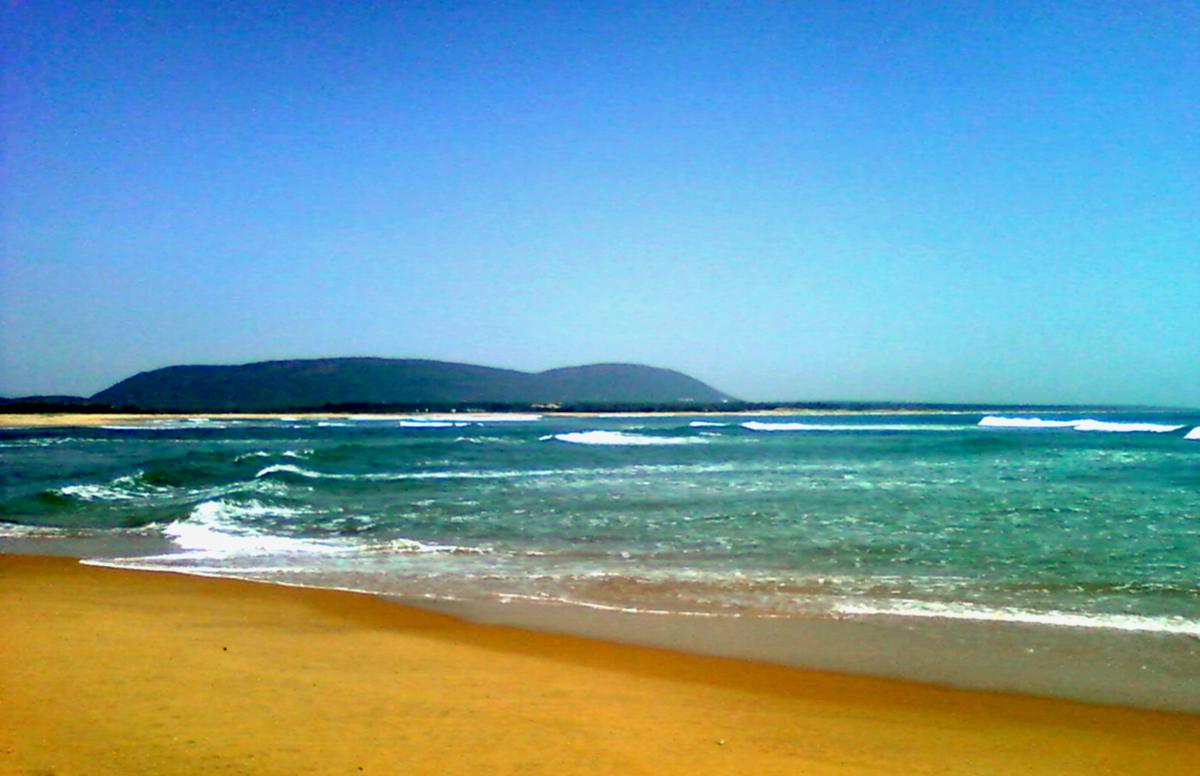
It is a paradise for tourists of all kinds, whether natural lovers, environmental lovers, wild animal enthusiasts, bird watchers or those who look for physical modern entertainments. Natural beauty is abundant in this majestic city, with ranges of pretty big hills, golden beaches along the Bay of Bengal coastline and natural valleys. The city has maintained its greatest appeal to the tourists all along the centuries. The beaches are against a setting of low ranges of scenic hills and lush greenery spotted with quiet coves and creeks. 

 Vizag is surrounded by three amazing hills, Sri Venkateswara Konda, Ross hill and Dargah konda. Each hill carries the legacy of housing the shrines dedicated to three different religions. Venkateswara temple is dedicated to Lord Shiva on Venkateswara Konda; Church of the Virgin Mary on Ross hill and the tomb of a Muslim saint, Baba Ishaq Madina Dargah on Dargah Konda. 

The popular tourist attractions are Kailasagiri Hill Park, VUDA Park, Mudsarlova, Dantapuram, Simhachalam Temple,Rushikonda Beach and Araku, a scenic hill-station. The city boasts of a submarine museum known as 'Smritika' at Rama Krishna Beach, the first of its kind in South Asia.


Attraction in Vishakhapatnam

Borra Caves

Borra Caves is highly renowned for its attractive stalactite and stalagmite formations and is located at 1400 meter above sea level in Anantagiri area of Visakhapatnam. Bearing archaeological importance, the Borra Caves have historical and religious significance also. In 1807, William King George of the Geological Survey of India discovered some Paleolithic implements assumed to be a million years old. 

Local folks throng to this place to worship the Shivalinga and the idol of the holy cow Kamadenu, which is place deep in the caves. The stone formations in the Borra Caves bear a resemblance to the udder (sthani) of a cow and hence it got the name Gosthani.


Buddhist Excavations

Bhavi Konda
Bhavi Konda, Thotla Konda, Bojjana Konda, and Salihundam located around Visakhapatnam were places of Buddhist excavations. These were hamlets of Buddhism during the second century AD. Excavation during 1906 in these places brought out many Buddhist monuments such as stupas and chaityas. It is believed that some of the corporal remnants of the Buddha were conserved at these sacred Buddhist places. 

The visitor is blessed with the view of architectural remnants of the Buddhist period dated from 200 BC to 700 AD, one of the earliest of its class in South India. 

Dantapuram, another Buddhist excavation site, is pretty placed at the confluence of river Vamsadhara with the Bay of Bengal not far away from Vizag. The excavations in this holy place have exposed many stupas and antiquities. 

On the eastern hill, there are a series of rock-cut caves, numerous groups of monolithic dagobas, standing on rock platform in tiers above each others and, crowning all, a rock-cut stupa with extensive structural remains. On the western side of the eastern hill is a stairway, partly rock-cut and partly structural, which leads up to a large double-storied cave. The cave is entered by a doorway and is flanked on each side by huge dwarapalas.


War Memorial

War Memorial
A memorial, also known as ‘Victory at Sea’, dedicated to the great soldiers who sacrificed their lives to the cause of national integrity and border protection, renowned as War memorial is located in Vizag on the left of the beach road and facing the submarine museum. 
This memorial is established to commemorate the victory on 1971 at the sea Indo Pak war. Many war related materials are displayed here, including a fighter plane, missiles, few bombs and a tank.


Araku Valley

Araku Valley
Blessed with enchanting streams, beautiful waterfalls, wealthy landscape and lovely weather, Araku valley that is placed at a height of 3100 feet in the effluent hills of Anatagiri, is a scenic hill station near Vizag in Andhra Pradesh. 

Renowned for the inhabitance of 17 tribal societies, Araku attracts many environmentalists, nature lovers and tourists. Dhimsa dance with colourful costumes and rich cultural performances accompanied with rhythmic pleasing songs is very popular. A famous festival celebrated in the region is Itika Pongal. 

Araku Tribal Museum, Rishikonda Beach, Padmapuram Gardens, Sangda Falls, Matsyagundam and Paderu form the major attractions.


Bheemli Beach

The calm and serene Bheemunipatnam Beach is located at the confluence of Gosthani River and the Bay of Bengal. Bheemunipatnam is featured by the ruins of a 17th century fort and cemetery, and history reveals that this was a Dutch settlement earlier period. 

The beach, known also as 'Bheemli', is renowned as the safest and calmest location for swimmers. 

The beach and refreshing climate united with the agreeable nature with the lusting greenery all around and the lined palm groves makes it an admired beach.